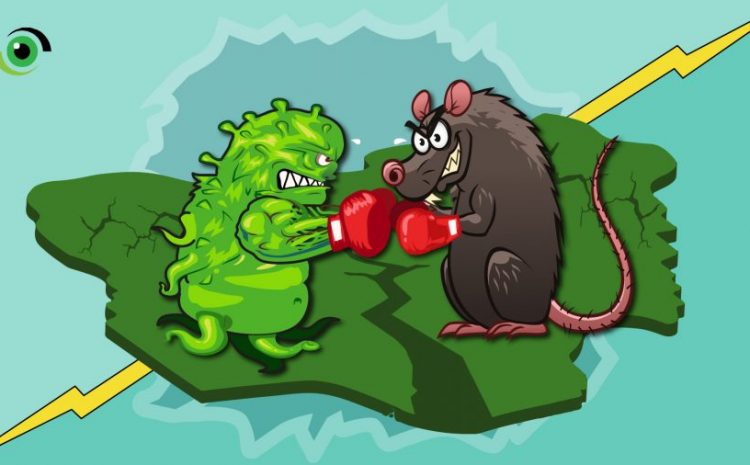
A tale of two diseases: COVID-19 and Lassa Fever
Other Related News
Minister of State for Health Visits FMC Jalingo
NOVEMBER 4, 2020

Two hundred and nineteen (219) – That is the number of lives lost to Lassa fever between January and June 2020, according to the latest data from the Nigeria Centre for Disease Control (NCDC). Nigeria has been experiencing a yearly outbreak of the viral haemorrhagic fever since it was first identified in Borno state in 1969. However, the 2020 outbreak happened to be the largest with 1040 confirmed cases across 27 states, with Case Fatality Rate (CFR) of 21%. In 2019, the country recorded 810 confirmed cases, 633 in 2018 and 308 in 2017. The NCDC activated an emergency operation centre in January 2020 to coordinate surveillance and response and provide technical support to states in controlling the outbreak. However, as Nigeria battled Lassa fever early in the year, another viral disease that is now a global pandemic, COVID-19 was first diagnosed in the country on February 27. The disease has infected over 41,000 people in Nigeria so far, with 868 deaths, according to the latest data from NCDC.
Lassa Fever: A Persistent Threat
Lassa fever has been a recurring challenge for Nigeria since its first identification in Borno state in 1969. The disease, a viral haemorrhagic fever, has shown a concerning upward trend in recent years. The 2020 outbreak marked a particularly devastating period, with 1040 confirmed cases across 27 states and a Case Fatality Rate of 21%, resulting in 219 lives lost between January and June alone.
The progression of cases over recent years paints a worrying picture: from 308 confirmed cases in 2017, to 633 in 2018, 810 in 2019, and peaking at 1040 in 2020. This escalating pattern underscores the urgent need for sustained surveillance and response mechanisms. The Nigeria Centre for Disease Control (NCDC) recognized this urgency and activated an emergency operation centre in January 2020 to coordinate surveillance, response efforts, and provide technical support to states grappling with the outbreak.
COVID-19: A New Global Challenge
As Nigeria was already grappling with the Lassa fever outbreak, a new viral threat emerged on February 27, 2020, when COVID-19 was first diagnosed in the country. This novel coronavirus, which has since become a global pandemic, has presented unprecedented challenges to healthcare systems worldwide, including Nigeria's.
According to the latest data from the NCDC, COVID-19 has infected over 41,000 people in Nigeria, resulting in 868 deaths. The dual burden of managing both Lassa fever and COVID-19 outbreaks simultaneously has placed immense pressure on Nigeria's healthcare infrastructure and response capabilities.
A Tale of Contrasting Responses
The COVID-19 pandemic has seen the largest deployment of financial, technical, and human resources for disease control in Nigeria. Federal and state governments are expending huge resources on building and expanding isolation centers, laboratories, and health worker capacities. Media attention has been heavily focused on COVID-19, causing the devastating effects of other diseases to "take a back seat."
Many Nigerians may be unaware that the NCDC has been battling a Lassa fever outbreak since the turn of the year. Lassa fever has been present for over 40 years and has a much higher case fatality rate (CFR) than COVID-19. This raises critical questions: Why is Lassa fever not receiving the same attention as COVID-19? Why have resources never been deployed towards its control in the country for over four decades? Why are Nigerians not as worried about Lassa fever as they are about COVID-19?
Lassa Fever: A Disease of Inequity
Lassa fever disproportionately affects specific populations, making it a disease of inequity. Health workers are particularly at risk, usually contracting the disease while treating infected persons. However, people living in rural areas are at the greatest risk of getting infected with Lassa fever.
The main source of infection is consuming foods infested by its carriers, rats. Other sources include direct contact with body fluids of infected persons. Communities with poor hygiene practices are key to the spread of the disease, including improper waste disposal, poor food processing and storage methods, and substandard or no drainage systems, which serve as the main reservoir for the rats.
These communities are mostly inhabited by people of lower socioeconomic class. Rats find ways into homes or workplaces, eating from food that is often left open or kept outside, and contaminating it with their urine and faeces, which carry the Lassa fever virus. This creates a cycle of infection that disproportionately affects Nigeria's most vulnerable populations.
Understanding COVID-19 Transmission
COVID-19 is transmitted through inhaling droplets from an infected person's cough or sneeze, or by touching a contaminated hand or surface and then one's face without washing or sanitizing. Unlike Lassa fever, COVID-19 affects everyone, including the rich, middle class, and public officials. This universal impact has been a key factor in the attention and resources it has received.
Global Pandemic vs Local Outbreak
The fundamental difference between these two diseases lies in their scope and impact. Lassa fever is endemic in West Africa, with cases sporadically reported across the region including Nigeria, Ghana, and Sierra Leone. In Nigeria, it has infected a little more than a thousand people, making it a localized health concern.
In stark contrast, COVID-19 is a global pandemic, with nearly every country battling it since the beginning of the year. It has led to economies shutting down, schools closing, and movements being restricted worldwide. The disease has infected above 16 million people globally, creating unprecedented economic and social disruption.
This difference in scale directly impacts resource allocation. Nigeria is battling Lassa fever on a large scale but receives fewer resources because it does not pose an economic threat of the same magnitude as COVID-19. The global nature of COVID-19 has mobilized international resources and attention that local outbreaks simply cannot command.
Fear and Anxiety: Treatment and Transmission
The level of fear and anxiety surrounding these diseases is influenced by several factors, including treatment availability and transmission modes. Lassa fever has a standard treatment with the antiviral drug Ribavirin, providing healthcare workers with a known therapeutic option. In contrast, COVID-19 drugs and vaccines are still in progress, creating uncertainty and heightened anxiety.
The modes of transmission also contribute to different levels of concern. Lassa fever requires contact with body fluids of an infected person or eating food contaminated by infected rats, making transmission more predictable and controllable. COVID-19, however, is transmitted through respiratory droplets, making it more transmissible and harder to control, especially in crowded settings.
The hosts of infection also differ significantly. Lassa fever's primary host is the Mastomys species of rats, a known and identifiable vector. COVID-19's exact host is still not certain, though it is suspected to originate from pangolins in a market in Wuhan, China, but other sources are not ruled out. This uncertainty adds to the global anxiety surrounding the pandemic.
The Predictable Cycle and Political Will
Lassa fever outbreaks occur almost yearly in Nigeria as the rainy season ends and the dry season begins. Despite this predictable cycle, the country has not shown sufficient political will to adequately prepare for or prevent the disease's annual occurrence. This lack of proactive planning contrasts sharply with the rapid response to COVID-19.
Recommended Prevention and Control Measures
Effective prevention requires a multi-faceted approach. State and local governments should conduct year-round, large-scale orientation and sensitization campaigns on how people can protect themselves against Lassa fever. These campaigns should use traditional media platforms and local languages to ensure maximum reach and understanding.
Environmental hygiene campaigns must be conducted year-round, not just during outbreak periods. Measures and penalties should be enforced to discourage continued defaulters. Local Government Areas (LGAs) must ensure proper waste disposal sites and drainage systems are available and strictly used in neighborhoods and public places, especially markets.
Healthcare System Preparedness
Hospitals and state governments should provide periodic training on Infection Prevention and Control (IPC) for health workers. Health workers should be trained to maintain a high index of suspicion for Lassa fever throughout the year, not just during peak seasons. State governments must ensure the availability of Personal Protective Equipment (PPE) for health workers to prevent occupational exposure.
Treatment and Healthcare Capacity
There is currently no vaccine for Lassa fever, but a drug is available for its treatment. State governments are responsible for ensuring this drug is available in all their hospitals, particularly during the dry season when cases peak. Currently, most Lassa fever cases are treated at tertiary and specialized hospitals owned by the federal government.
This centralized treatment approach creates bottlenecks and delays in care. State governments need to take ownership and build the capacity of their own hospitals to provide treatment, reducing the burden on federal facilities and improving access to care for affected communities.
Conclusion: Equal Attention for All Deadly Diseases
Both COVID-19 and Lassa fever are deadly diseases and warrant adequate attention from the government. The contrasting responses to these diseases reveal not just differences in scale and transmission, but also in political will, resource allocation, and societal priorities. The COVID-19 pandemic has demonstrated that rapid, coordinated response is possible when there is sufficient political commitment.
The lessons learned from COVID-19 should be applied to Lassa fever and other endemic diseases. Nigeria has the opportunity to transform its approach to epidemic preparedness, moving from reactive crisis management to proactive prevention and control. This requires sustained political will, adequate resource allocation, and a commitment to addressing health inequities that make certain populations more vulnerable to disease outbreaks.
In Nigeria and many other countries, issues disproportionately affecting poor people often do not receive adequate media attention or government focus. This pattern is evident in the contrasting responses to these two diseases.
The Seasonal Pattern of Lassa Fever
Lassa fever peaks annually during the dry hot season from December to June and causes fatalities. Despite this predictable pattern, media reports on Lassa fever infections and deaths often fail to prompt authorities to fight the disease proactively. State governments typically make only reactive preparations, responding to outbreaks rather than implementing preventive measures.
Infrastructure Challenges in Pre-COVID Nigeria
The pre-COVID-19 situation in Nigeria revealed significant infrastructure gaps. Most states lacked isolation centers, and those that existed were small, ill-equipped, and could accommodate not more than 20 people at a time. Health facilities struggled to provide personal protective equipment (PPEs) to health workers, leading to their infection and sometimes death from Lassa and other diseases.
The burden of epidemic preparedness for Lassa fever outbreaks has primarily fallen on the NCDC, which supplies PPEs, Ribavirin (an antiviral medication), and technical expertise to state governments. This centralized approach has limited the effectiveness of local responses.
A Paradigm Shift with COVID-19
In stark contrast, COVID-19 has compelled state governments to take ownership of epidemic preparedness. States are now building and expanding isolation centers and collaborating with the NCDC to establish testing laboratories in their respective domains. This represents a fundamental shift from reactive to proactive epidemic management.
Related

